
Supply Chain Resilience in Chemicals
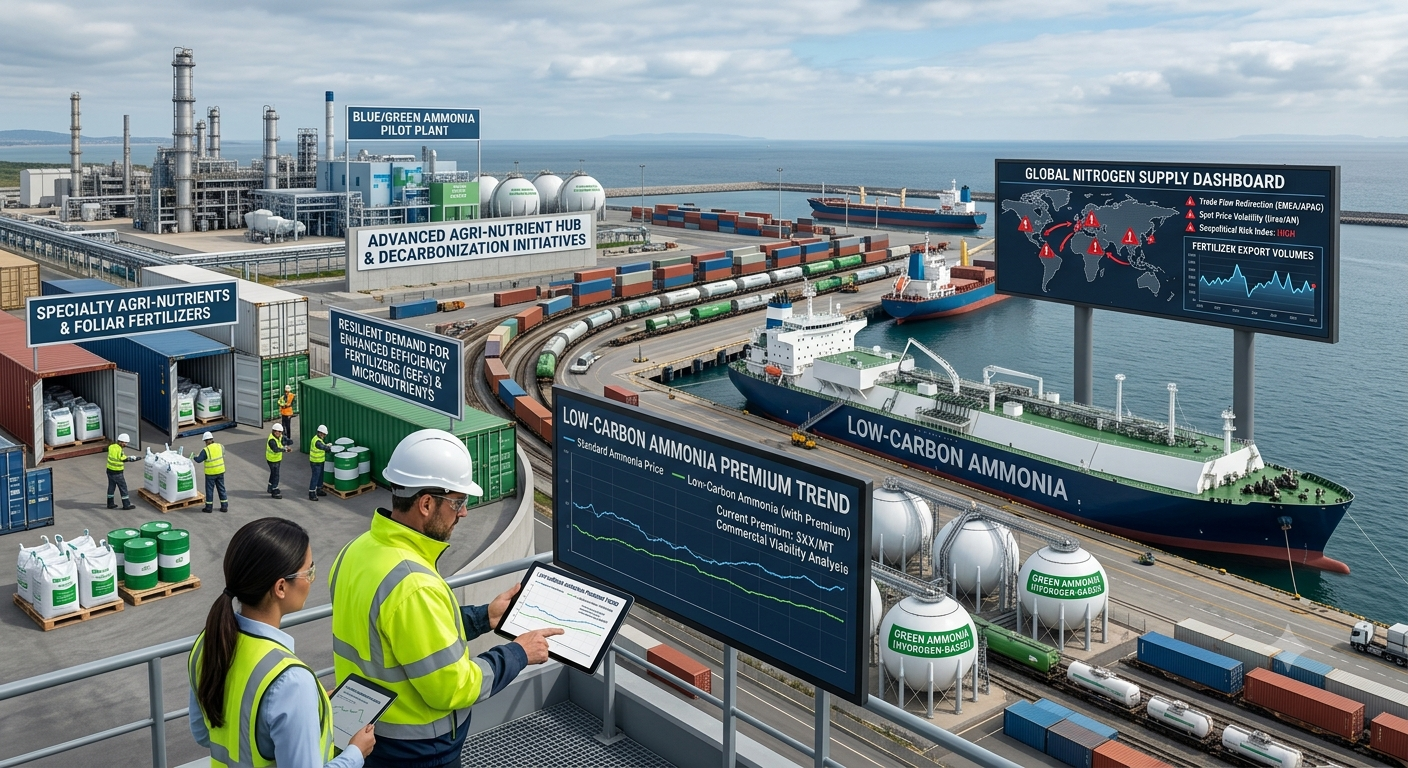
The discussion examines shifting global nitrogen economics, fertilizer trade disruptions, supply chain risks, specialty agri-nutrient demand resilience, and the commercial viability of low-carbon ammonia premiums amid evolving agricultural and decarbonization market dynamics.
Q1. Could you start by giving us a brief overview of your professional background, particularly focusing on your expertise in the industry?
Regarding Fertilizers, I worked for one of the largest Nitrogen and phosphate fertilizer producers globally, SABIC, for 9 years until 2 years ago, putting my hands on project development regionally and globally, as well as business and global sales. Now I have shifted my focus to a wider industry scope (specialty chemicals), which covers business development and market studies on Paint and coating, Home and personal care, and cosmetics.
Q2. How are low-cost regional expansions in North America and the Middle East shifting the global nitrogen cost curve, and which high-cost assets are most vulnerable to being priced out?
Indian producers are enjoying steady gains from local demand and heavy subsidies that are not anticipated to be waived; however, we have seen moves by the government to push companies to find alternatives (nano Urea Fertilizers and others) to avoid draining the country's coffers. On the other hand, expansions in North America with cheaper/accessible raw materials are struggling to foresee the future. Shall I look heavily into green/blue products, or capitalize on the downstream? Both regions created a supply…
Create an account to continue reading
Create AccountAlready have an account? Sign in
Need an expert in this space?
Talk to an Industry Expert
Knowledge Ridge connects decision-makers with carefully vetted subject matter experts for one-on-one calls, research sprints, and advisory engagements — across 11 sectors and 163 sub-industries globally.
Comments
No comments yet. Be the first to comment!