
The Future of India's Solar Ecosystem
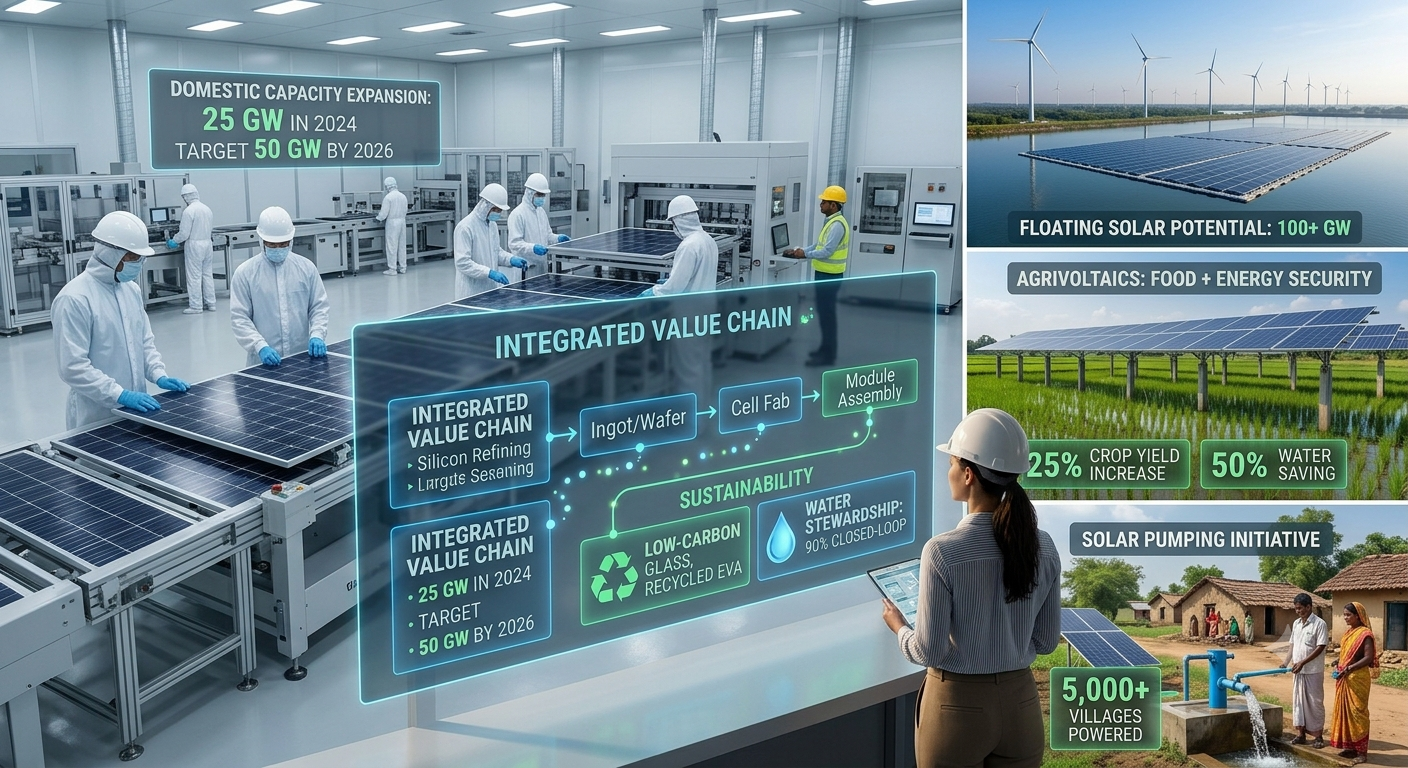
Explore how India's solar manufacturing sector is evolving through domestic capacity expansion, integrated value chains, sustainability-driven practices, and emerging opportunities in floating solar, agrivoltaics, solar water pumping, and hybrid renewable energy systems.
Q1. Could you briefly describe the roles where you were directly responsible for manufacturing scale-up, project execution, or operational outcomes, including the scale of facilities or teams managed?
In my previous roles, I was responsible for solar PV Cell and Module manufacturing plant setup, operations, production scale-up, and cross-functional project execution. My responsibilities included improving project coordination, project management, production efficiency, capacity expansion, process optimization, and quality management, as well as coordinating engineering, procurement, and operations teams. I managed projects and manufacturing teams, drove cost-reduction initiatives, and ensured projects were delivered on schedule while meeting quality and safety standards. For the last 20 years, I have worked at ADANI, TATAPOWER, LANCO, etc., and I started my consultancy in 2022 as YNY. We have done PMC work with many solar PV manufacturing companies.
Q2. How do you see the Indian solar manufacturing ecosystem evolving as the country pushes toward greater self-reliance and reduced import dependence?
India is moving from being primarily a module assembler to building an integrated manufacturing ecosystem. Government initiatives such as Production Linked Incentives (PLI), Basic Customs Duty (BCD), and Approved List of Models and Manufacturers (ALMM) are encouraging domestic investments. While dependence on imported wafers and polysilicon…
Create an account to continue reading
Create AccountAlready have an account? Sign in
Need an expert in this space?
Talk to an Industry Expert
Knowledge Ridge connects decision-makers with carefully vetted subject matter experts for one-on-one calls, research sprints, and advisory engagements — across 11 sectors and 163 sub-industries globally.
Comments
No comments yet. Be the first to comment!